
Seventy years of computers, from a room full of machines to one spoken sentence
In 1983 I was admitted to the information program in the Department of Library Science at Peking University. During university I had to learn to program a computer.
For my graduation project I used a language called COBOL and wrote an information-retrieval program.
The computer room was large. Terminals stood in rows, one person at each.
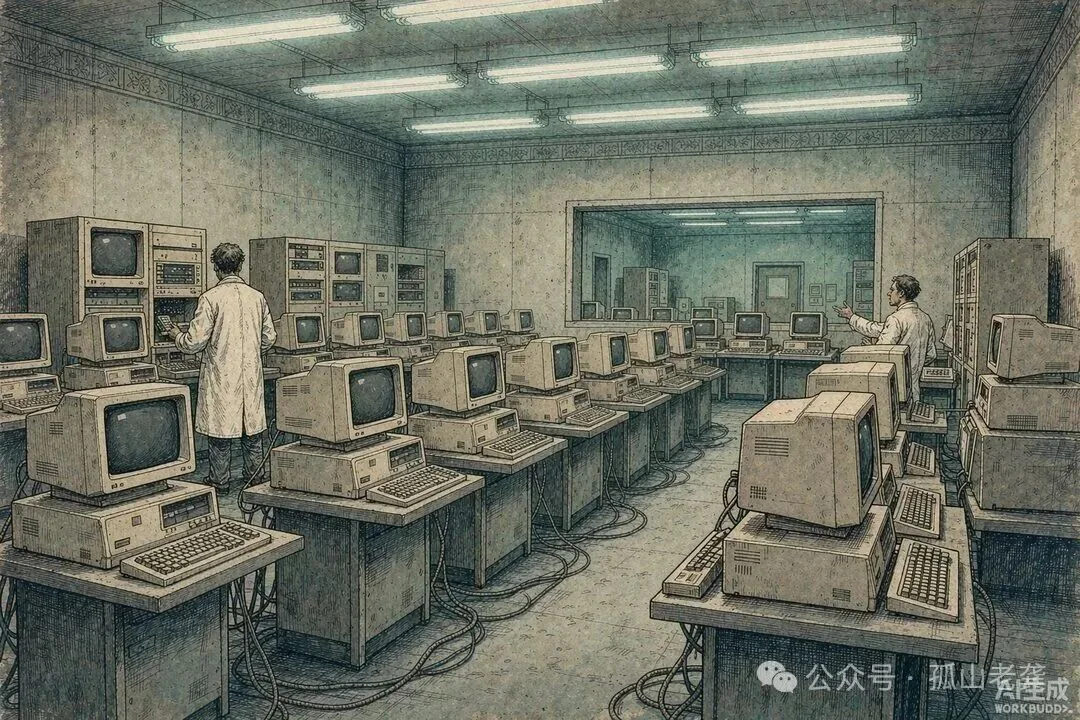
Now I no longer write a program line by line. I say one sentence, and it starts the work by itself.
What happened in these seventy years?
1. Paper tape, and a pile of zeros and ones
At the beginning, the only way to speak to a computer was punched paper tape.
A row of holes was punched in a tape about an inch wide. A hole was 1. No hole was 0.
A long string of zeros and ones was one command.
Think of it this way: if you want to talk to someone who recognizes holes and not words, you first have to translate your words into holes.
Writing a program then meant punching holes in paper. Change the program once, and you punched a new batch of tape. If the tape went soft, the holes smeared. If it got damp, the holes clogged.
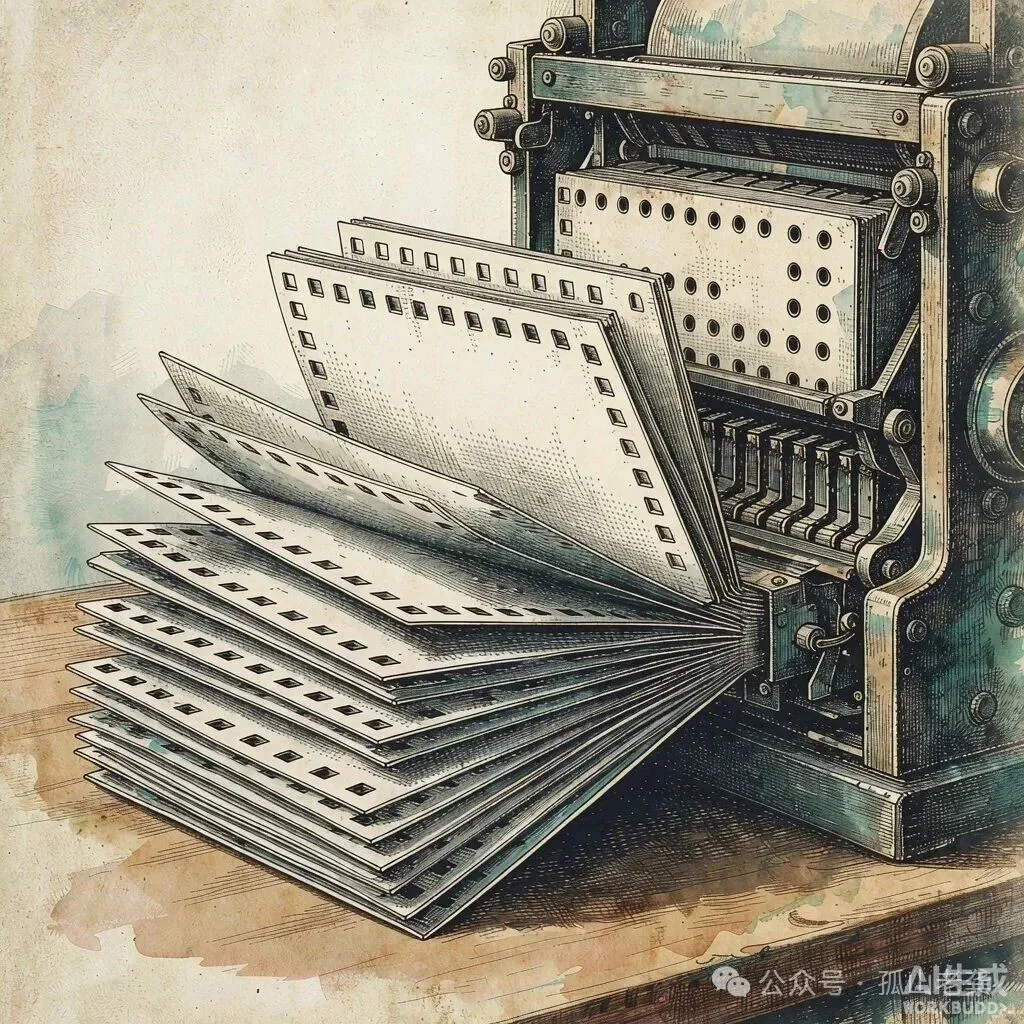
In those days, the first thing a programmer learned was how to deal with binary.
2. Assembly: giving the machine code a name
The second step forward was assembly language.
What it did was simple. It gave those zeros and ones names.
For example:
MOV  AX, 5      ← put 5 into the place called AX
ADD  BX, 3      ← add 3
JMP  LOOP       ← jump back and continue
At last you did not have to count zeros and ones. You could write words you could read, such as MOV, ADD, and JMP.
It was still the machine's language. Each word matched one action inside the machine. You had to memorize the vocabulary, and you still had to decide which slot the data went into.
3. Human language arrives: FORTRAN, COBOL, BASIC
The third step was a language you could really write in human words.
FORTRAN, in 1957, was the first true high-level language. You wrote a mathematical formula, and it calculated it.
COBOL, in 1959, was made for people in business, and later spread through banking systems. It reads very much like an English sentence:
       IDENTIFICATION DIVISION.
       PROGRAM-ID.  SOU-SOU.
       PROCEDURE DIVISION.
           DISPLAY "Hello, world".
           STOP RUN.
See the middle line? That is "Hello, world." No counting zeros and ones, no memory addresses. You were writing human language.
The information-retrieval program I wrote in the 1980s was in COBOL.
BASIC, in 1964, was simple enough for a high-school student. You could write a first program in one evening. A great many people touched a computer for the first time through BASIC.
4. Databases: managing data without programming
The fourth step was the database.
Before databases, if you wanted to look through a pile of data or make a tally, you had to find someone to write a program.
After databases, that changed. You could ask it directly.
SELECT name FROM staff WHERE department = 'finance'
See? That line does not look like a program. It looks like talking to a person.
A database management system stores the data, and lets you ask for it in something close to ordinary speech.
That was a turning point. From then on, using data was no longer the same thing as writing a program.
Ordinary people who could not program could still look up wages, stock, and name lists.
5. Later the languages multiplied, and grew simpler
PASCAL, in 1970, made a program read like an essay, one section after another, with a clear shape.
C, in 1972, is what systems and operating systems are written in.
Java, in 1995, could be written once and run in many places.
Python, in 1991, has a grammar close to English. A few lines can do one job, and now everyone uses it.
Languages have kept becoming more like human speech:
machine code → assembly → FORTRAN/COBOL → BASIC
            → PASCAL/C → databases (SQL) → Java/Python → Go
Each layer is closer to everyday speech than the one before it.
6. Now one sentence is enough
Then came the graphical screen. You no longer memorized commands. You clicked with a mouse.
Then came Office: Word, Excel, PowerPoint. You could use them without a course.
The real change has been these last few years.
Now you do not have to learn programming. You only have to speak:
- "Translate this into English."
- "Read the writing on this form."
- "Draft a notice for me, and don't make it sound official."
You finish the sentence, and it does the work. It is not merely faster. There is nothing to study first.
In seventy years, the barrier dropped seven times
- Machine code to assembly: the instructions got names.
- Assembly to COBOL and its cousins: the names became human language.
- Complicated languages to BASIC: anyone could learn.
- Writing programs to databases: knowing how to ask was enough.
- Writing it yourself to copying someone else's: you could take it and use it.
- Writing code to AI completion: the computer helps you write.
- Stating what you need to letting AI do it: you do not even have to look at the code.
Each drop was small. Added together, they go from a room full of machines to a single sentence.
So this is not the hardest time. It is the easiest time.
In the years before, the people at the machines spent their lives lowering this barrier.
Now the barrier is down at your feet.
Enough talk. I tried it.
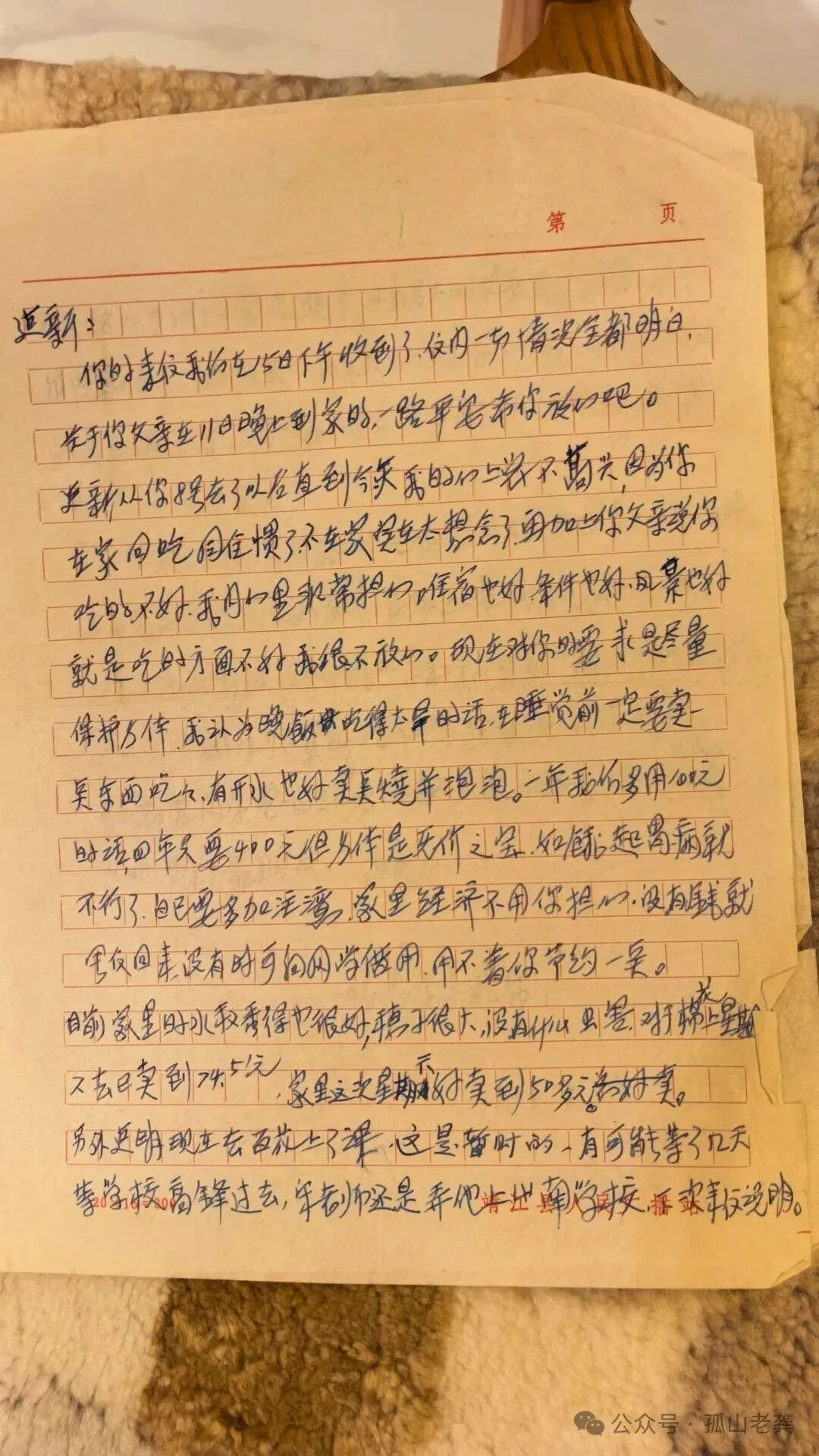
I did nothing except say one sentence:
"Read the characters on this handwritten letter."
This page was written to me by my mother in September 1983. I was 18 that year, leaving Jingjiang in Jiangsu for university in Beijing for the first time. My mother had finished junior middle school. In those years, that counted as some education.
It did read the page. I am pasting the result exactly as it came out, not one character corrected:
The AI transcription, kept as it was, with no corrections:
第页
女家日吃用在惯了不想男加你久
吃持低年件好
就是的不好很不放贝女你受是量
伴押件国认为版就尚得大异的话,车睡觉前足要主
吴孕面吃九,有开小好至美烧并想泡一年我多用0元
不竹多加湾,家更既不用你担不没有就
另外更明现在去百放单这是智时的有可能天
Do you see the problem? It is full of wrong characters.
"Our family" (咱家) became "女家". "Increase" (增加) became "男加".
The page actually has more than twenty lines. It read eight.
I am not going to fix it before showing you. What it read is what you see. That is what honest looks like.
But I want to be clear about what it did manage:
- It was fast. This page took 1.7 seconds.
- It was incomplete. It missed half the page, and got plenty of characters wrong.
- It is a clue, not an answer.
The real progress is the step from "not one character right" to "usable about eight times out of ten." If the handwriting is regular, the recognition rate goes up a great deal.
This job used to require someone who could program. Now it requires someone who can speak.
You can try it today
You do not have to wait for me to teach you. Two minutes is enough:
- Install WorkBuddy on your computer.
- Find an old letter at home, or an old photograph, and take a picture with your phone.
- Open the chat box on the WorkBuddy home screen and send the photo up.
- See what it reads.
I will bet on this: your result will look like mine. Half of it right, half of it nonsense.
This is the thing I most want to tell you.
AI does not read everything, but it reads faster than you do. When it reads something wrong, you have to be able to see that it is wrong.
Next time I will show you how to make AI read a letter more accurately.
A word before you leave
Before you go, two things help both of us.
First, after you try it, tell me how accurate it was. Any number is fine: all right, all wrong, half right. Just say what happened.
Second, how do you want me to teach AI? Reading characters first? Sorting the old photos at home? Or making spreadsheets and slides?
You say, and I will follow that.
I read the messages one by one. This column will stay free, so that nobody's time is wasted.
I am Gushan Laogong, from Gushan in Jingjiang. See you next time.
Next: Let AI do the work, not only answer questions
First published on the WeChat account Gushan Laogong: Seventy years of computers